


If you want to find your soulmate, start with two goals that can coexist: increase the number of compatible people you meet, and improve the evidence you use to recognize a healthy connection. You do not have to choose between romance and reality.
A portrait, quiz, or symbolic reading can help you name what you hope for. It cannot identify a stranger or replace the mutual choices that create a relationship. The practical work begins when the fantasy becomes a clearer question.
What people mean when they say “find my soulmate”
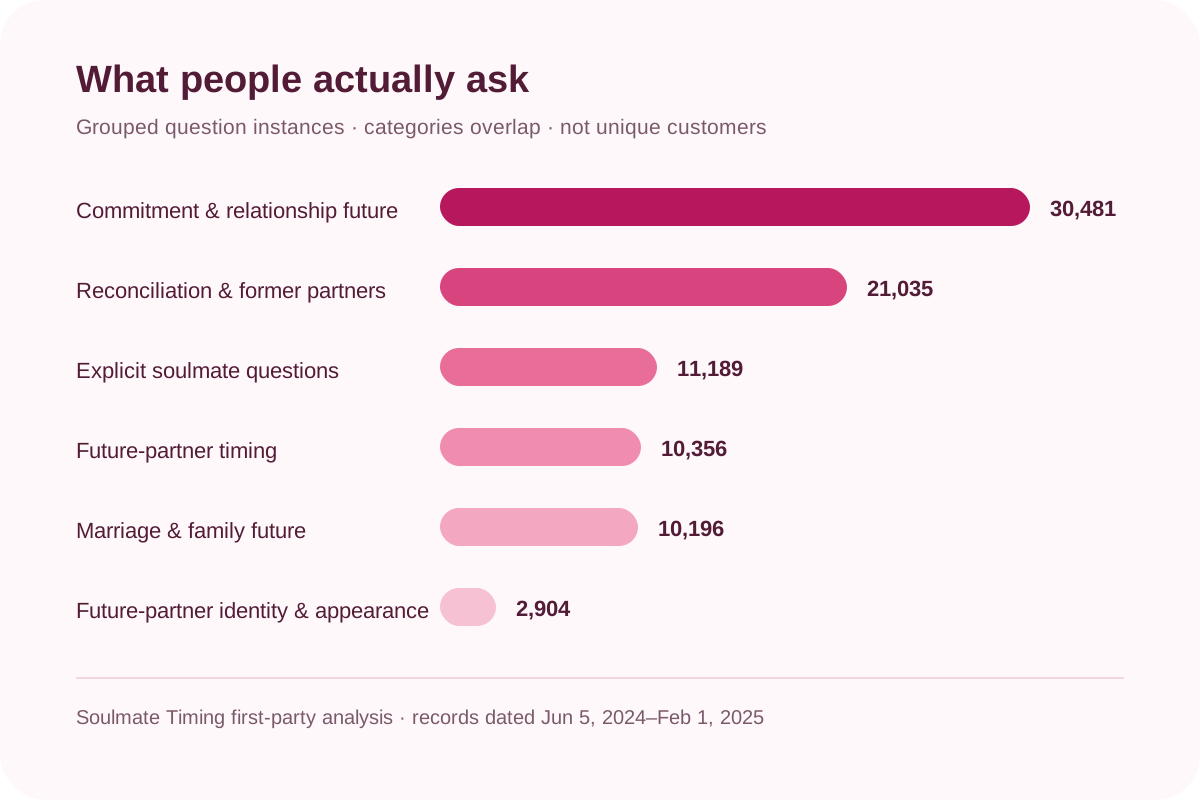
Our first-party analysis covered 126,927 historical reading records from 2024-06-05 through 2025-02-01. Among 31,257 strictly relevant future-partner records, we identified 11,189 explicit soulmate question instances, 10,356 future-partner timing instances, 10,196 marriage-and-family instances, and 2,904 future-partner identity or appearance instances.
These categories overlap and count question instances, not unique customers. A person asking “When will he appear, what will he look like, and will we have children?” contributes to more than one category. That overlap is the most important finding: people rarely want only a face. They want recognition, timing, commitment, and hope bundled into one answer.
Translate the wish into four separate questions
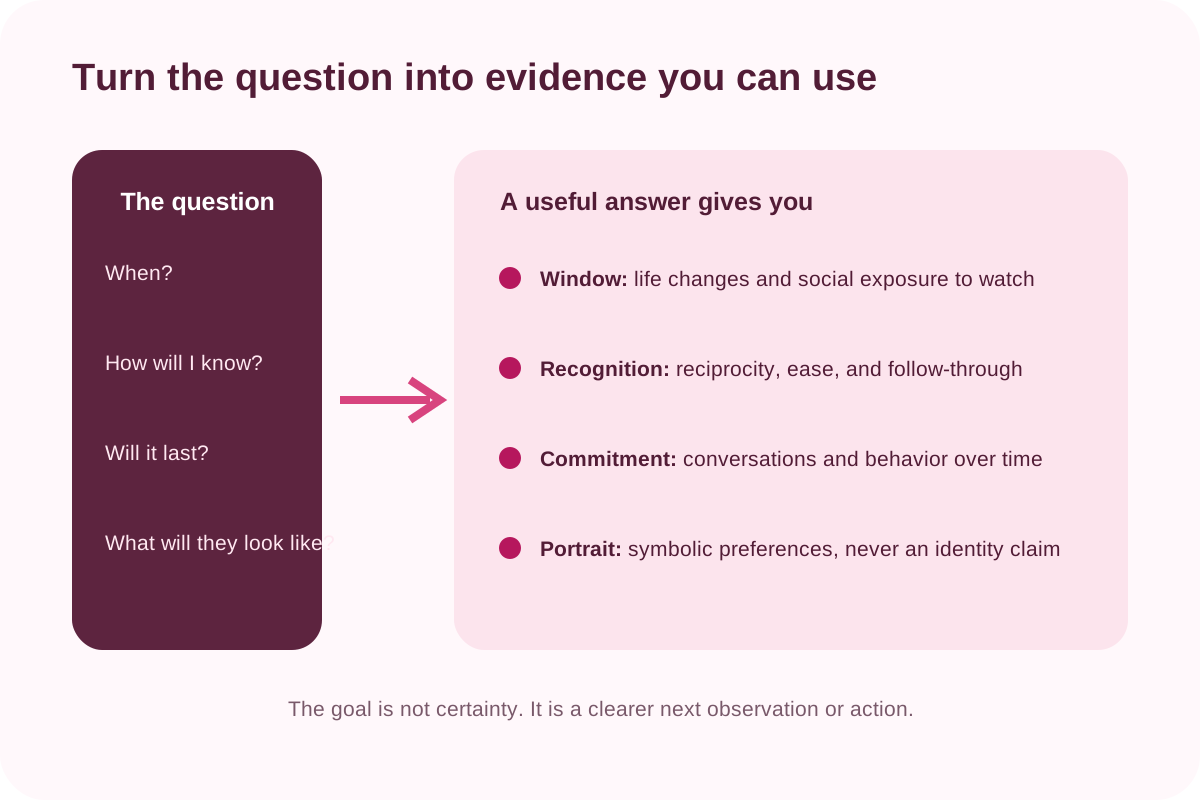
Separating the questions prevents one emotional answer from doing too much.
1. When might I meet someone?
Look for periods when your routine expands: a move, new project, class, community role, trip, or friend-group change. Timing becomes more useful when it points to increased exposure, not a guaranteed date.
2. How will I recognize them?
Use behavioral cues. Do they initiate? Follow through? Respect a no? Ask questions that show they remember your inner life? Familiarity and chemistry feel powerful, but reciprocity is easier to verify.
3. Could it lead to commitment, marriage, or family?
That answer emerges through conversation. Values about exclusivity, location, money, children, caregiving, and pace are not romantic spoilers. They are how a shared future becomes visible.
4. What kind of person am I drawn to?
A symbolic portrait can make preferences easier to notice: expression, age range, presentation, energy, or setting. It should not become a facial search warrant. The useful question is “What quality does this image represent to me?”—not “Which stranger matches every feature?”
Build a search environment instead of waiting for luck
Meeting more people is not the same as collecting more matches. Design for repeat contact and shared context.
| Environment | Why it helps | What to try |
|---|---|---|
| Recurring interest group | People see each other across several weeks. | Language class, choir, running club, book group |
| Friend-of-friend setting | Some social context already exists. | Small dinner, birthday, community event |
| Values-based activity | Behavior is visible, not just profile text. | Volunteering, professional group, faith community |
| Intentional dating | Relationship goals can be stated early. | Fewer, better-filtered conversations and dates |
| Everyday weak ties | Familiarity can grow without immediate pressure. | Neighborhood café, dog park, coworking space |
Choose one environment you can attend at least four times. A recurring context gives you more evidence than a one-night search and lowers the pressure to label someone immediately.
Define compatibility before chemistry takes over
Write three lists:
- Required: respect, relationship intention, location, family goals, or other factors that materially affect a future.
- Preferred: interests, style, energy, or traits you enjoy but can discuss.
- Disqualifying: contempt, dishonesty, coercion, chronic inconsistency, or a life direction that conflicts with yours.
Keep the required list short enough to describe a person, not a fictional character. Keep the disqualifying list serious enough to protect you, not avoid ordinary human imperfection.
Use a three-date evidence check
This is not a rule for deciding whether to marry someone. It is a way to slow down idealization.
After the first date: Did I feel able to be present? Was interest mutual?
After the second date: Did their follow-through match what they said? Did I learn something specific about their values?
After the third date: Is the connection becoming clearer, or am I doing most of the interpreting and initiating?
If the answer is uncertain, gather more evidence. If the answer is unsafe, you do not need a spiritual label to leave.
What a personalized reflection can add
A responsible symbolic report can help you:
- describe a partner style that complements rather than duplicates you;
- notice one or two timing windows connected to real life transitions;
- separate recognition cues from surface appearance;
- answer a personal question without repeating the general report; and
- carry a hopeful image into dating without treating it as proof.
The report is most useful before you attach it to a specific stranger. Use it as a private brief for your attention, not a test other people must pass.
A seven-day starting plan
- Write your three required relationship qualities.
- Identify one recurring place where compatible people may gather.
- Ask one friend for a low-pressure introduction or invitation.
- Update one dating profile sentence to state what you are building.
- Stop pursuing one connection that offers attention without continuity.
- Schedule the recurring activity for the next four weeks.
- Review what you noticed—not whether fate arrived on schedule.
The goal is not to become less romantic. It is to give your hope somewhere real to land. ❤️
Frequently asked questions
Finding a soulmate in real life
QShould I look for someone who resembles a soulmate sketch?
No. Treat the image as symbolic. Prioritize mutual interest, boundaries, reliability, and shared direction over facial similarity.
QCan one person have more than one soulmate?
Soulmate is a personal belief, not a scientific category. Many people use it for more than one deeply formative relationship across a lifetime.
QDoes trying harder make love happen faster?
More compatible exposure can improve opportunity. Over-pursuing one uncertain person does not create reciprocity and may obscure better evidence elsewhere.
Sources and research method
- Soulmate Timing aggregate analysis of 126,927 historical reading records dated 2024-06-05 to 2025-02-01. The published figures are overlapping question-instance categories, not unique-customer counts. See our Editorial Policy.
- Pew Research Center: Key findings about online dating in the U.S.
- U.S. Office on Women’s Health: Healthy relationships
Research and external links were last reviewed on August 30, 2026.