


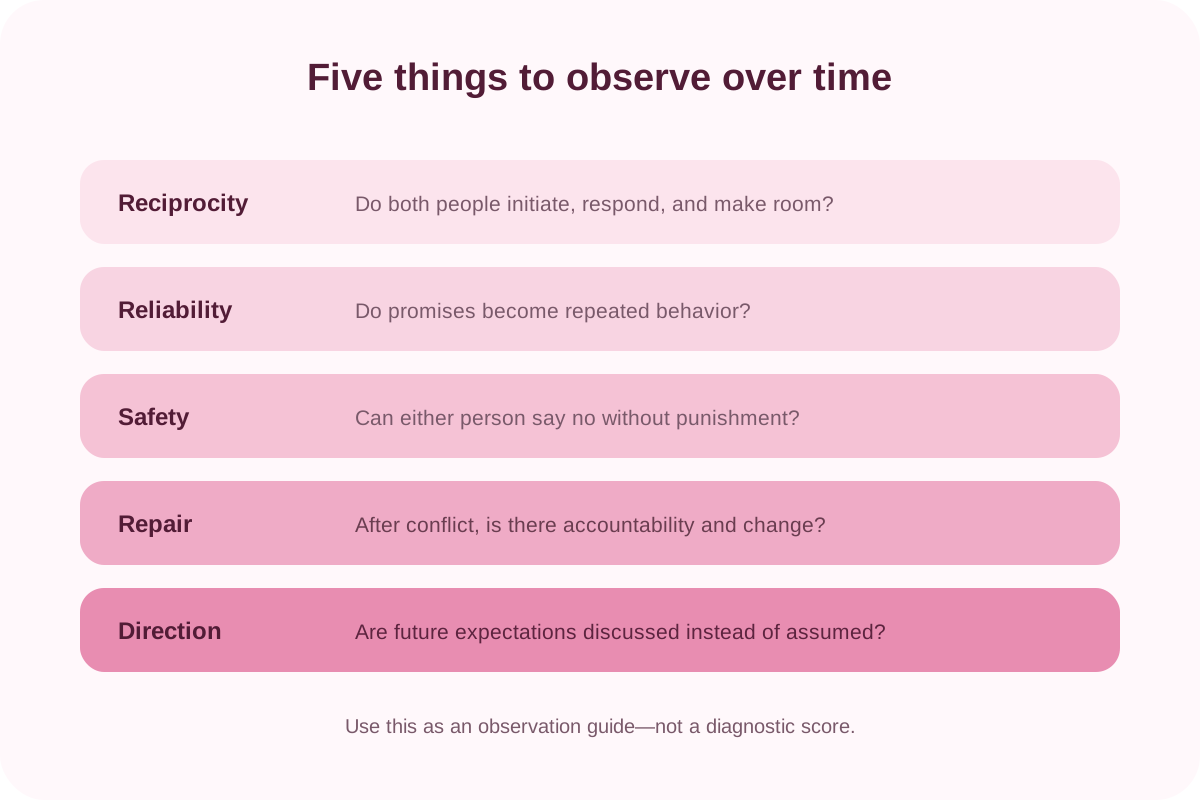
You cannot prove that someone is your soulmate with a checklist. You can, however, ask a more useful question: Does this connection repeatedly show reciprocity, reliability, safety, repair, and shared direction?
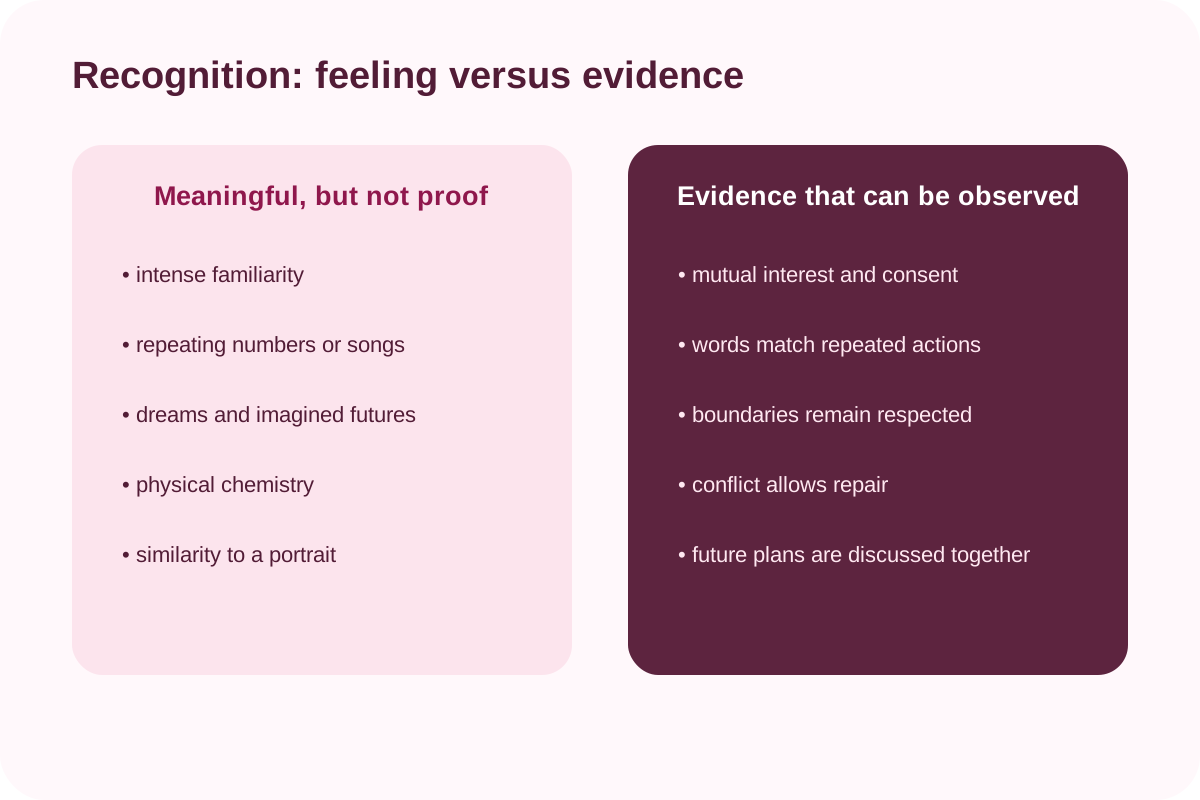
Chemistry, familiarity, dreams, and coincidences may feel meaningful. They tell you something about your experience. They do not tell you what the other person will choose or whether the relationship is healthy.
Why “Is this my soulmate?” is rarely only one question
Our analysis of 126,927 historical reading records from 2024-06-05 through 2025-02-01 found 11,189 explicit soulmate question instances. In the same multi-label dataset, 30,481 instances concerned compatibility, commitment, or the future of a relationship, while 5,033 asked about another person’s feelings or intentions.
The categories overlap and are not unique-customer totals. Their relationship still matters: people often ask for a spiritual label when they need evidence about mutuality and direction.
Five dimensions that matter more than a list of 40 signs
Long soulmate-sign lists create false confidence because almost anyone can recognize a few items. A shorter rubric makes you look for patterns over time.
1. Reciprocity
Both people initiate contact, ask questions, make plans, and adapt. The effort does not have to be mathematically equal each day, but it should not depend on one person carrying the entire connection.
Observe: If you stop over-functioning, does the relationship still move?
2. Reliability
Words and repeated actions align. Plans sometimes change; consistent care includes communicating rather than disappearing and returning with intense promises.
Observe: Can you predict their basic respect even when the mood is less romantic?
3. Safety and boundaries
You can say no, ask for time, maintain friendships, and express a different opinion without punishment. Jealous monitoring, coercion, threats, or pressure are not evidence of a rare bond.
Observe: Does closeness expand your life or make it smaller?
4. Repair
Healthy couples still disappoint each other. Repair means listening, naming the impact, accepting responsibility, and changing behavior—not using “we are soulmates” to skip the difficult conversation.
Observe: After conflict, does clarity increase?
5. Shared direction
Attraction cannot answer questions about exclusivity, marriage, children, location, money, caregiving, or pace. The relationship becomes more real when both people can discuss the future without relying on assumptions.
Observe: Are your next steps being chosen together?
Signs that feel spiritual but need context
“I felt as if I had known them forever”
Familiarity can feel calm and beautiful. It can also come from encountering a dynamic that resembles an earlier relationship. Ask what becomes familiar: mutual ease, or the need to earn uncertain attention?
“We keep seeing the same numbers and songs”
Once something has emotional importance, your attention notices it more often. The coincidence can still become a personal ritual. It should not outweigh direct communication.
“They look like the portrait I received”
A portrait may reflect your stated or inferred preferences. Similarity is not identity evidence. Do not investigate, approach, or pressure a stranger because their face resembles a generated image.
“The chemistry is unlike anything I have felt”
Intensity tells you the connection activates you. It does not distinguish compatibility from uncertainty. Give chemistry time to meet reliability.
Green, yellow, and red evidence
| Evidence level | Examples | Next step |
|---|---|---|
| Green | Mutual plans, respected boundaries, consistent follow-through, honest future conversations | Continue learning about each other at a sustainable pace. |
| Yellow | Strong attraction but unclear intentions, inconsistent texting, assumptions about exclusivity | Ask directly and observe behavior after the answer. |
| Red | Coercion, threats, isolation, stalking, contempt, repeated deception | Prioritize safety and seek trusted or professional support. |
No spiritual framework should convert red evidence into a lesson you are required to endure.
A four-week observation instead of an instant verdict
If the connection is safe enough to continue, keep brief notes for four weeks:
- Who initiated meaningful contact?
- Which promise was followed by action?
- Was a boundary respected without sulking or retaliation?
- How did each person respond to a misunderstanding?
- Did future expectations become clearer?
The goal is not surveillance. It is to prevent one exciting moment from erasing the rest of the pattern.
Where a symbolic reading fits
A reading can help you describe what you hope to recognize, especially before you have attached the story to a particular person. It can offer language for compatibility themes, a symbolic portrait, and a timing window. The final judgment still belongs to real behavior and mutual choice.
Frequently asked questions
Recognizing a soulmate
QCan someone be my soulmate if the relationship is painful?
A relationship can be meaningful and still be unhealthy. Pain, instability, or repeated separation does not prove destiny. Safety and mutual choice matter more than the label.
QHow long does it take to know?
There is no universal duration. Attraction can be immediate; reliability, repair, and shared direction require repeated situations over time.
QWhat if all the signs are present but they do not choose me?
Their choice is decisive evidence. A relationship requires consent and reciprocity; signs cannot substitute for either.
Sources and research method
- Soulmate Timing aggregate analysis of 126,927 historical reading records dated 2024-06-05 to 2025-02-01. Categories are overlapping question instances and no private customer fields are published. See our Editorial Policy.
- U.S. Office on Women’s Health: Healthy relationships
- National Domestic Violence Hotline: Relationship spectrum
- American Psychological Association: Relationships
Research and external links were last reviewed on August 30, 2026.