


A soulmate drawing is a symbolic portrait of an imagined compatible partner. It can be a beautiful prompt for hope and self-reflection. It cannot identify a real stranger, prove what a future partner will look like, or guarantee that a predicted relationship will happen.
The practical question is not “Is the face real?” It is “What exactly will I receive, how was it personalized, and does the written interpretation give me anything useful beyond the image?”
Why the portrait alone is not the whole product
We analyzed 126,927 historical reading records dated from 2024-06-05 through 2025-02-01. In our overlapping question categories, only 2,904 instances focused on a future partner’s identity or appearance. By comparison, 10,356 asked about timing, 10,196 about marriage or family, and 30,481 about relationship compatibility, commitment, or future direction.
These are question instances rather than unique customers, and one question can appear in multiple categories. The pattern still explains why an image-only offer often feels incomplete: the face attracts attention, but the customer’s real concern usually includes timing, recognition, and whether the bond can last.
What a useful soulmate drawing report contains
A complete deliverable should make each layer easy to find.
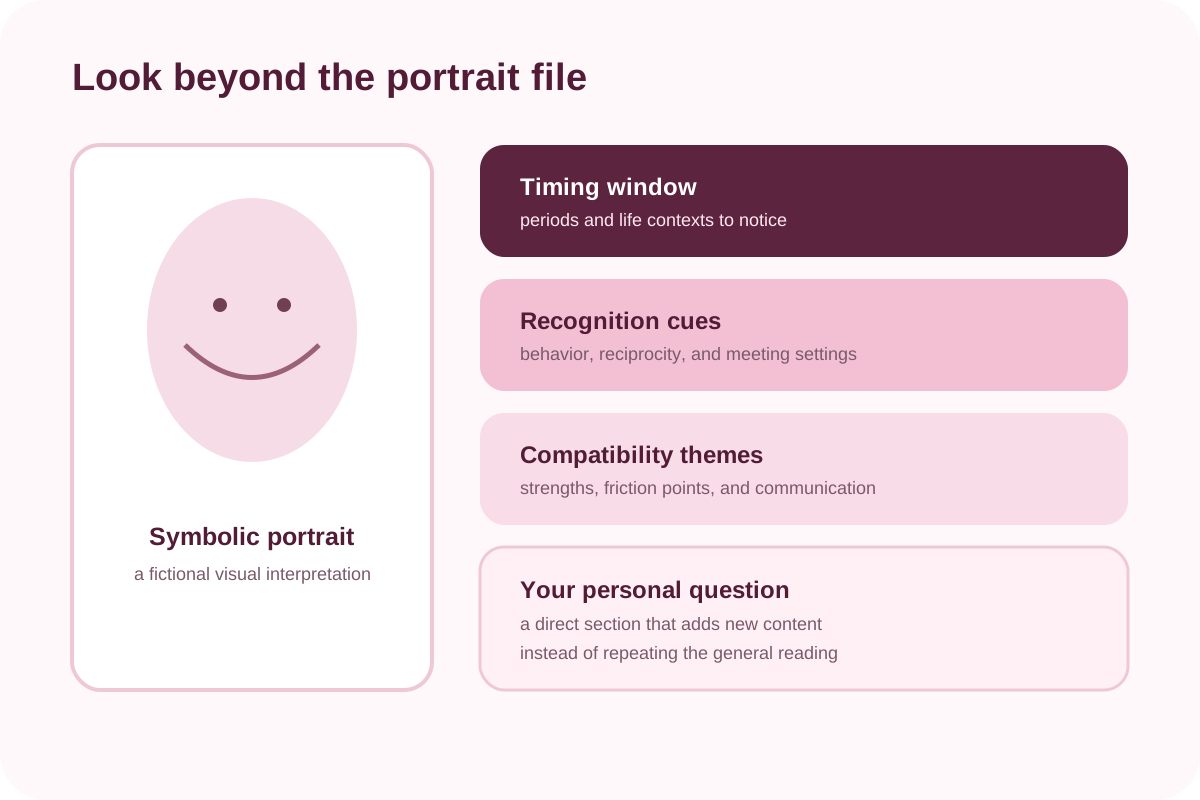
1. The symbolic portrait
The portrait may be pencil-style, painted, or photorealistic. Its details can be influenced by the customer’s partner preference, approximate age context, and descriptive themes. A person seeking a man should not receive a report whose text repeatedly describes a woman, and vice versa. The image and text must share one consistent brief.
2. A direct answer
If the customer asks “When will I meet him?” or “Will this lead to marriage and children?”, the report needs a clearly labeled answer that addresses each part. It should not make the customer search through eight pages for a sentence that only repeats the introduction.
3. Timing and meeting context
One or two symbolic windows are more useful than a list of dates. Each window should connect to a life context—expanded routine, travel, work change, community, or a period of stronger discernment—and state that it is not a guarantee.
4. Recognition and compatibility
This section should focus on observable qualities: reciprocity, communication, boundaries, pace, and how two people may complement each other. Hair color alone does not help someone recognize a healthy partner.
5. The personal question
The optional question must create new content. If the general report already discusses timing, the answer can add which setting is most plausible, what would distinguish the stronger window, or how marriage intentions could become visible. Repetition makes personalization feel fake.
How an AI-assisted result can remain coherent
A reliable workflow separates generation into stages while preserving one customer brief.
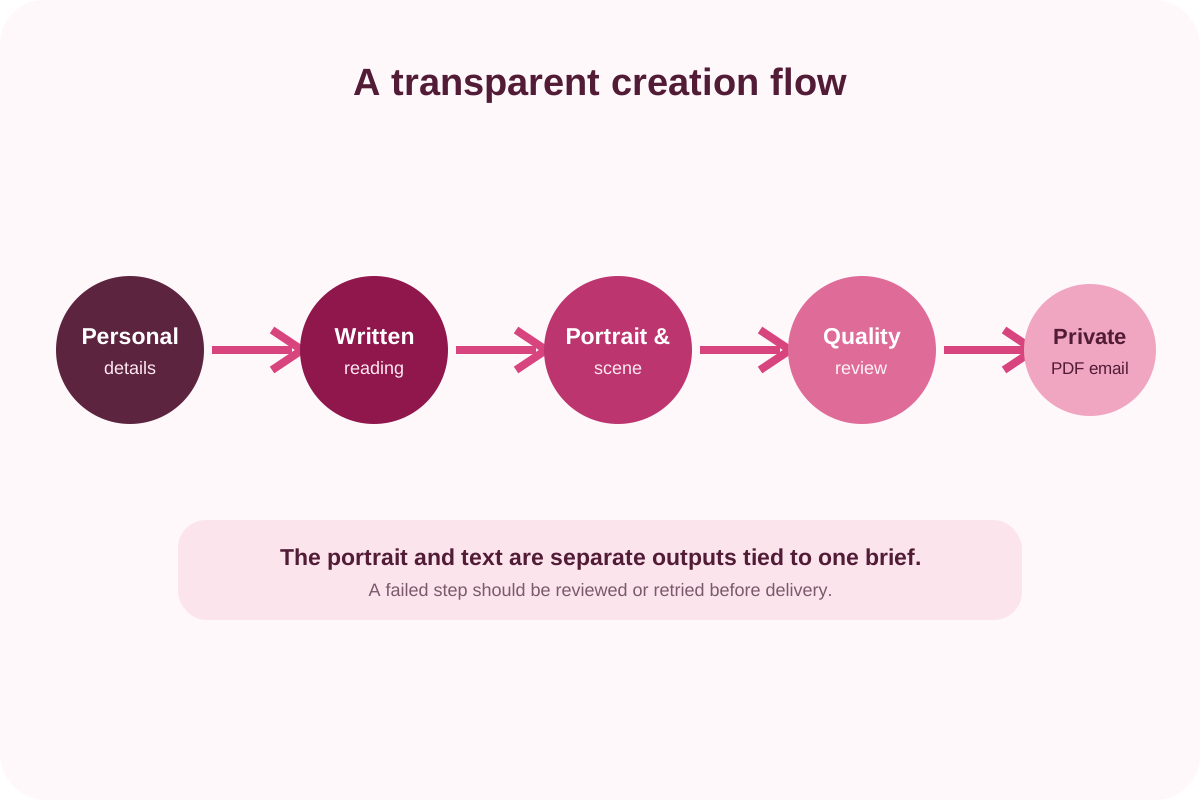
The brief should contain the customer’s chosen name, birth date, gender, partner preference, and optional question. It should also define:
- the partner’s gender and pronouns;
- an age range appropriate to the customer’s context;
- the same face, hair, age, and overall presentation across both images;
- a consistent symbolic timing framework;
- required report sections and maximum repetition; and
- prohibited claims, including real-person identification.
The text, portrait, and meeting scene can then be generated separately. A quality review should compare the whole meaning, not search for a handful of pronouns with a brittle regular expression. It should ask whether the customer details match, whether each question is answered, whether sections contradict one another, and whether the result makes an impossible factual claim.
If review finds a fixable issue, the draft and the exact problem should return to the revision step. Starting the same prompt from zero without telling the model what failed wastes time and can repeat the error.
AI, human artist, and hybrid drawings
The phrase “soulmate drawing” describes several production methods.
| Method | What changes | What should be disclosed |
|---|---|---|
| AI generated | A model creates the portrait from a text or structured brief. | Model-assisted creation and fictional nature |
| Human commissioned | An artist interprets the buyer’s instructions. | Authorship, revision terms, and delivery format |
| Hybrid | AI creates a base that a person edits or selects. | Which stages are automated and which are human |
| Template-based | A pre-existing design is lightly customized. | The limited level of personalization |
None of the methods verifies a future identity. “Human drawn” describes authorship; it does not turn the picture into evidence.
How to assess the finished report
Use this six-part review:
- Input accuracy: Are your name, birth date context, and preferences correct?
- Internal consistency: Do the title, text, portrait, and scene describe the same kind of partner?
- Question coverage: Is every part of your optional question answered?
- Information gain: Does each section add something instead of paraphrasing the same prediction?
- Useful limits: Does the report avoid identifying a real person or guaranteeing an outcome?
- Readable delivery: Is the PDF legible on a phone, without empty pages, tiny type, or images separated from their explanation?
What no soulmate drawing can establish
No provider can verify:
- the exact face or identity of a future partner;
- a guaranteed date, marriage, pregnancy, or relationship outcome;
- another person’s private feelings without their communication;
- compatibility based only on visual resemblance; or
- that a stranger you find online is the person in the drawing.
If an offer uses urgency, fear, or supernatural certainty to override those limits, slow down before paying.
Frequently asked questions
Soulmate drawing questions
QIs a soulmate drawing a picture of a real person?
No. It is a fictional or symbolic interpretation shaped by the creation method and information supplied. It should not be used to identify anyone.
QWhy can a portrait still feel familiar?
The image may reflect common features, your stated preferences, or qualities you already associate with attraction. Familiarity can be emotionally meaningful without proving identity.
QWhat if the report uses the wrong gender or details?
Contact the provider with the order number and the specific mismatch. A personalization error should be reviewed and corrected rather than treated as a prediction.
Sources and research method
- Soulmate Timing aggregate analysis of 126,927 historical reading records dated 2024-06-05 to 2025-02-01. Categories overlap and represent question instances, not unique customers. See our Editorial Policy.
- U.S. Federal Trade Commission: How to recognize and avoid consumer scams
- NIST AI Risk Management Framework
Research and external links were last reviewed on August 30, 2026.