


The short answer is: nobody can verify the exact date you will meet a soulmate. A useful timing reading should offer one or two plausible periods, explain the life circumstances connected to them, and give you recognition cues you can observe. It should not pretend the universe has booked an appointment.
That answer may sound less dramatic than “next September.” It is also more useful. The word when usually contains three different needs: hope that love is still possible, a sense of direction, and reassurance that you will recognize a healthy opportunity when it appears.
What our historical question data reveals
We reviewed 126,927 historical reading records dated from 2024-06-05 through 2025-02-01. Within that set, 31,257 records were strictly relevant to a future partner, soulmate, timing, appearance, or future-love question. Our multi-label classification identified 10,356 future-partner timing question instances.
The chart below shows why a timing answer cannot stand alone. People also asked about commitment, reconciliation, marriage, family, recognition, and appearance. One question may belong to several categories, so the bars are question instances—not unique customers—and should not be added together as a customer total.
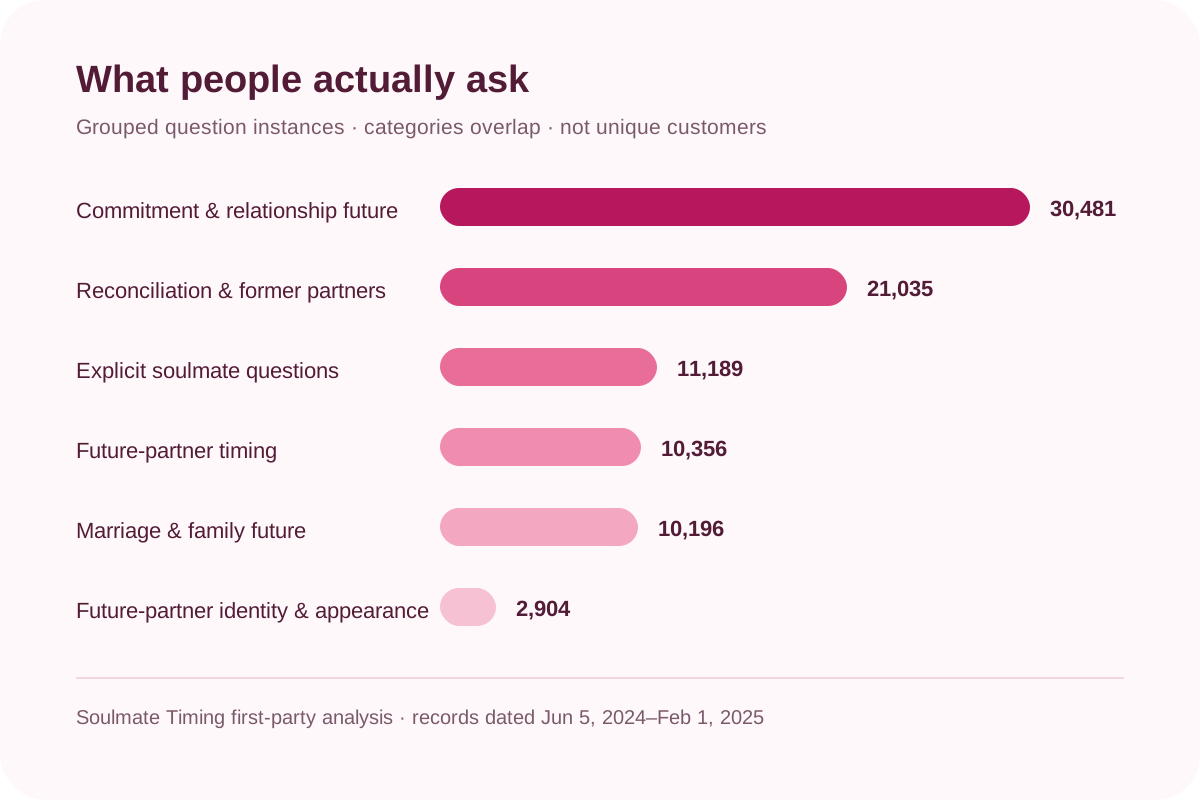
The useful insight is not that 10,356 people wanted the same date. It is that timing questions often act as a doorway to a larger decision: Should I stay open? Am I looking in the wrong places? Is this new connection consistent enough to trust?
What makes a meeting window plausible
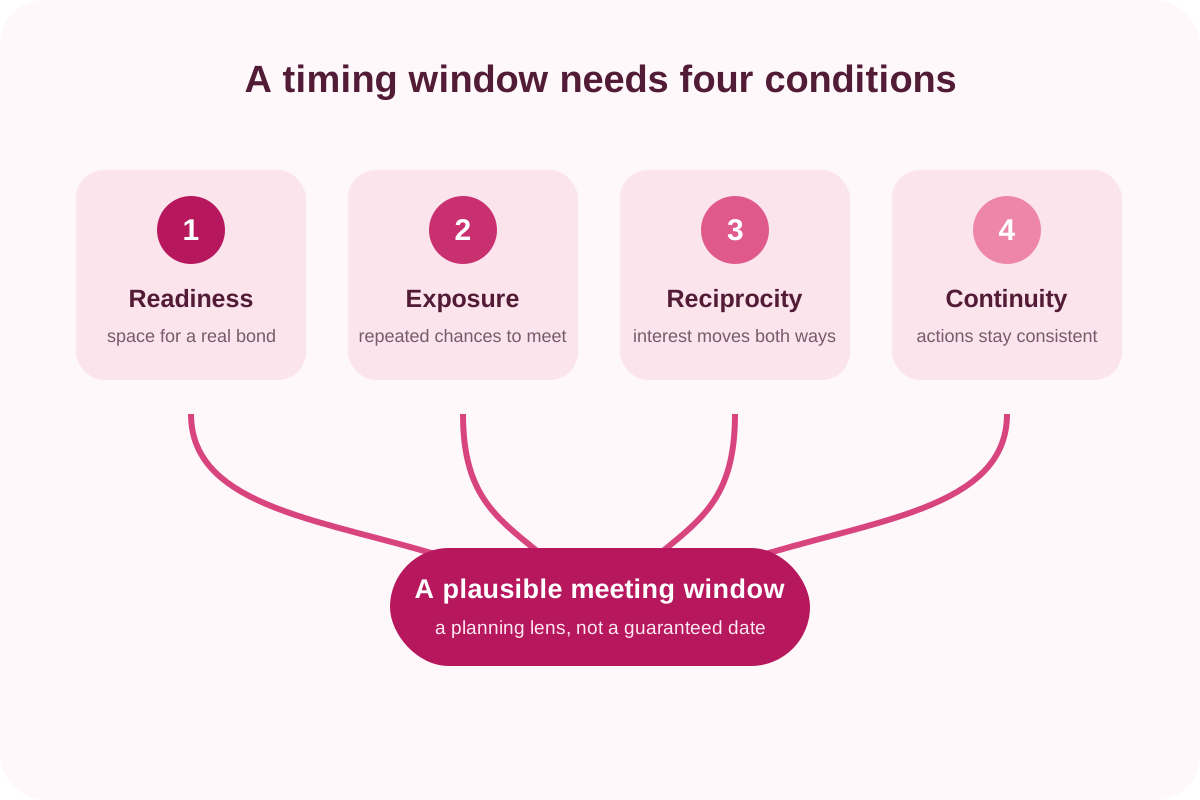
A responsible timing framework combines four conditions.
- Readiness: You have emotional and practical room for a relationship.
- Exposure: Your ordinary life creates repeated contact with new people.
- Reciprocity: Interest, effort, and curiosity move in both directions.
- Continuity: The connection survives beyond one intense conversation or attractive first impression.
Readiness is more specific than “love yourself first”
You do not need to become perfectly healed before dating. Readiness can be as concrete as having time for a second date, being able to state what you want, and noticing when uncertainty turns into chasing. Someone can feel lonely and still be unavailable; another person can feel nervous and still be ready to build something mutual.
Exposure is where probability enters the story
New relationships require contact. A move, new class, changed commute, volunteer role, friend’s gathering, or renewed hobby can increase the number of people you meet repeatedly. Repeated low-pressure contact matters because it gives both people more information than a single high-stakes date.
This is why a useful reading names settings and transitions, not just a month. “During a period of expanded social routine” gives you something to notice. “On October 17 at 3 p.m.” offers false precision.
Reciprocity and continuity turn a meeting into a relationship
Chemistry answers “Do I feel something?” Reciprocity asks “Is the other person also showing up?” Continuity asks whether words and actions still align after the novelty fades. These later signals matter more than whether a person resembles a portrait or arrives during the predicted week.
How symbolic timing can be used without pretending it is science
Astrology, numerology, tarot, and intuitive language can create a memorable story around a period of change. Within those traditions, a birth date may be used to describe relationship themes or a transition from one symbolic cycle to another. These systems do not have scientific evidence for identifying an exact future meeting.
The most honest use is lightweight: the symbolism provides a reflective frame, while the practical section explains what the reader can observe. For example, a “6 → 7 transition” should be described consistently as moving from duty and relationship responsibility toward reflection and discernment—not as a secret calculation that proves a marriage date. ✨
One or two timing windows are better than endless dates
A useful report can offer:
- a primary window connected to the strongest life transition;
- an optional secondary window if the first period is more about preparation than meeting; and
- signs that would make either window more or less relevant.
The windows should be broad enough to avoid fake precision and narrow enough to guide attention. They should not simply move forward by the same number of months every time a customer orders again. A repeat reading should acknowledge what changed in the customer’s circumstances rather than recycling a date.
Questions to ask before trusting a timing reading
Use this five-point check:
| Question | A stronger answer looks like | A weak answer looks like |
|---|---|---|
| What supports the period? | It names the inputs and the life theme they shaped. | “The universe told me.” |
| What can I observe? | Settings, behavior, and relationship pace. | Only a month or age. |
| What if it does not happen? | The period is framed as reflective, not guaranteed. | Blame or pressure to buy another reading. |
| Does it answer my question? | A direct section adds new information. | The same paragraph is repeated. |
| Are limits visible before payment? | Method, delivery, and limits are easy to find. | Disclosures appear only after checkout. |
What to do while you wait
Choose one action in each category for the next six weeks:
- Increase exposure: attend one recurring activity instead of several one-off events.
- Improve recognition: write down three behaviors that make you feel safe and three that create confusion.
- Protect reciprocity: stop doing all the initiation for a connection and observe what happens.
- Make room: decide what time and emotional habit a real relationship would need from you.
These actions do not force fate. They make your real-world evidence clearer.
Frequently asked questions
Soulmate timing questions
QCan a birth date reveal the exact day I will meet someone?
No. A birth date can be used inside a symbolic framework, but it cannot scientifically identify an exact future meeting. Treat the result as a themed window and compare it with observable changes in your life.
QWhy do different readings give different dates?
They may use different methods, assumptions, or generation rules. If a provider cannot explain why the period was selected, the date is not useful evidence.
QWhat if I already know someone during the stated window?
Look at reciprocity, reliability, boundaries, and shared direction. A coincidence in timing is not enough to identify someone as your soulmate.
Sources and research method
- Soulmate Timing first-party aggregate analysis of 126,927 historical reading records dated 2024-06-05 to 2025-02-01. Counts are question instances; categories can overlap; no private customer fields or raw questions are published. See our Editorial Policy.
- Pew Research Center: Nearly half of U.S. adults say dating has gotten harder
- American Psychological Association: Building and maintaining healthy relationships
Research and external links were last reviewed on August 30, 2026.